Introduction
The continuous humid weather is hard to bear, and LED display devices are particularly affected. When LED devices get damp, it often leads to issues like dead lights and crosstalk. Once the problems occur, they are irreversible and can even be difficult to control. How can we safely pass through the humid days? Taking preventive measures in advance is the key!
Details
1.Waterproof ≠ Moisture-proof.
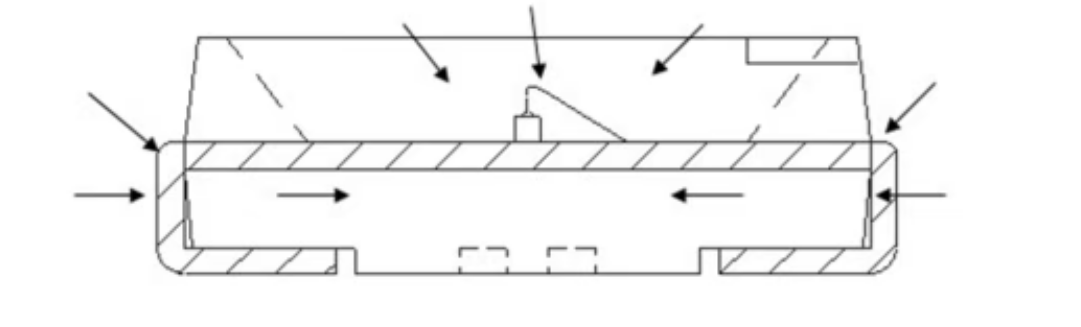
Waterproofing prevents liquid water, while moisture-proofing prevents moisture and damp air. The encapsulation materials of LED display devices are mainly epoxy resin and other plastic materials. Plastics belong to high molecular materials, which have larger gaps between their molecules. Gas phase water molecules can penetrate into the casing through these gaps, but liquid phase molecules, due to their own surface tension and low fluidity, penetrate at a much lower rate. LED display devices, outdoor lamp beads are designed with structures to meet the waterproof function. However, regardless of outdoor or indoor lamp beads, due to the properties of plastic materials, they are all moisture-sensitive electronic components.
2.The hazards of LED display devices being damp.
When LED display devices become damp and moisture seeps into the components, if halogen-containing moisture in the air enters the device while it is powered on, the halogens in the moisture can undergo electrochemical reactions with the metals inside the device. This can severely cause chip short circuits, leakage, or loss of electrode, leading to dead pixels and abnormal light leakage on the display.
 3. Moisture-proof measures for LED displays The first step in moisture-proofing - Storage of LED components
During the transportation and storage of LED components, objects can be used to elevate them and waterproofing and moisture-proofing preparations should be made. At the same time, the storage environment of LED components is also important, and it is recommended to monitor temperature and humidity. The optimal storage environment is: temperature < 30℃, humidity < 60%RH.Moisture prevention second station---LED components are put online.
The LED display components must be baked and dehumidified before mounting. Different products and varying degrees of moisture have corresponding solutions.
Pay attention to controlling the environment during chip placement. It is recommended that the temperature be between 20℃ and 30℃, and the humidity between 40% RH and 60% RH. Be mindful of the placement cycle, and use it as soon as possible after taking it out of the oven or drying cabinet.Moisture-proof Station 3 - LED Module Packaging.
When storing or transporting modules and cabinets, vacuum packaging or sealing with desiccants is required. The screen should not be installed simultaneously with ongoing renovations to avoid an uncontrollable environment, and should not be exposed to humid conditions for extended periods without power on. After installation, the screen should be lit and used regularly. If the display has not been used for an extended period (generally 5-10 days), it should be dehumidified before use, and the brightness should be gradually increased to slowly warm up and remove accumulated moisture inside the screen.